

Digital Waste Tracking: Phase 1 is now live - what it means for your business
The first mandatory phase of Digital Waste Tracking (DWT) came into force on 1st October 2026, permitted and licensed waste receiving sites in England and Wales must report the controlled waste they receive using the government’s ‘Report receipt of waste’ service.
This is the start of a phased shift from paper-based systems to a single digital record of waste movements across the UK. It sits alongside (rather than immediately replacing) existing Waste Transfer Notes, consignment notes and returns.
What Phase 1 requires
Operators of permitted sites that receive controlled waste (including transfer stations, treatment facilities, recyclers and similar sites) must submit a digital record of every load within two working days of receipt (excluding weekends and bank holidays).
The record includes:
- Movement, carrier and receiver details
- Waste classification codes (EWC / List of Waste codes)
- Recovery or disposal codes
- Specific information on hazardous waste and persistent organic pollutants (POPs) where they apply.
Sites can submit via software that connects to the service (API) or by uploading a government spreadsheet template. There is an annual fee per legal entity. Non-compliance can lead to compliance notices, monetary penalties or prosecution.
Scotland and Northern Ireland follow from 1 January 2027. Phase 2, which will bring carriers, brokers and dealers into the system, is planned for October 2027 (with public beta expected in spring 2027).
What this means for our clients
As a waste broker, Footprint Recycling arranges collections and destinations on your behalf.
- Waste producers are not required to use the digital service in Phase 1. Your duty of care continues unchanged: you must transfer waste only to an authorised person, describe it accurately, and retain complete Waste Transfer Notes (or equivalent) for the required period.
- Destination sites are now responsible for creating the digital receipt record.
- Existing paperwork still travels with the load and must be completed correctly. Accurate descriptions and classification on the WTN help receiving sites meet their new obligations and support the wider goal of better traceability.
Why accurate waste tracking matters
Digital Waste Tracking is designed to close the information gaps that have long made waste crime harder to detect and prosecute. By giving regulators more timely, consistent data on where waste is received, the system supports faster identification of suspicious patterns and stronger enforcement.
For legitimate businesses it also delivers practical benefits:
- Greater transparency across the supply chain
- Stronger evidence of compliance and due diligence
- Improved data for sustainability reporting and circular-economy goals
- Reduced risk of materials being mismanaged or diverted.
What Footprint Recycling is doing
We continue to work with our collection suppliers and receiving sites to confirm they understand the Phase 1 requirements, have tested their processes and software, and are ready for mandatory reporting. We are also reinforcing the need for complete and accurate Waste Transfer Notes on every movement.
As Phase 2 approaches, we will keep reviewing how the system evolves for brokers and carriers so we can support you with minimal disruption.
Next steps for you
- Continue to keep complete Waste Transfer Notes for every collection.
- Make sure waste descriptions and classifications are accurate - this supports both your duty of care and the receiving site’s digital reporting.
- Read the official guidance on GOV.UK and monitor updates as the service develops.
- Contact us if you have any questions about how this affects the service we provide.
We are here to help you stay compliant and confident as the industry moves to digital tracking. If you would like to discuss any aspect of your waste arrangements, please call us on 01484 660770.

Environment agency confirms new charging approach for simpler recycling
The Environment Agency (EA) has confirmed changes to how it will recover the costs of regulatory work linked to the simpler recycling reforms, following a public consultation.
Under the new approach, the EA will apply a £118 hourly “time and materials” charge where regulatory work is required due to non‑compliance. The charge applies only to businesses and occupiers of relevant non‑domestic premises that fail to meet the recycling requirements.
Why the change?
The updated charging model is designed to ensure that the cost of enforcement falls on non‑compliant businesses, rather than those that meet their obligations. This reflects the polluter pays principle and aligns with how the EA recovers costs for other technical regulatory services.
The hourly rate is based on an assessment of the staff time and activities needed to carry out compliance checks and enforcement work.
Consultation outcome
Feedback on the proposals was mostly positive, with respondents commenting on fairness, customer impact, environmental protection, and the design of the charging scheme. After reviewing all responses, the EA decided to implement the charge as proposed, without changes.
When it takes effect
The revised charges will apply from 3 February 2026. The updated charging scheme has now been published on GOV.UK.
What this means for businesses
- Compliant businesses will not be charged
- Non‑compliance may result in hourly regulatory charges
- Early compliance helps avoid additional costs and regulatory intervention
For businesses, the message is clear: meeting simpler recycling requirements reduces both regulatory risk and cost.
The EA have published and updated their documents regarding charges (these charges started from 3/2/2026) Read the full details here:

It’s National Kindess Day – help us support those in need!
As the colder months approach, many people in our community face the harsh reality of winter without the warmth and comfort we often take for granted. This National Kindness Day, we invite you to join our Winter Warmth Campaign in support of Focus4Hope, and we need your help to make a real difference!
We need help to create Christmas Hampers, ensuring vulnerable families have food on their tables this Christmas, and for those with no shelter this winter we want to provide warmth with warm clothes, coats and sleeping bags.
How you can help:
- Warm clothes collection. Arrange your own office collection point and we will pick them up OR if you are visiting our offices drop your items off at our collection point. We looking for essential items such as coats, jumpers, sleeping bags and footwear.
- Bring an item a day. As part of a ‘Food Advent Calendar’ help us collect items from our shopping list.
- Spread the word by sharing our campaign with staff.
Why It Matters:
Every item you donate will go directly to someone in need, helping them stay warm this winter and providing vulnerable families with food. We will aim to pick up items WC 8th December 2025. Together, we can show the power of kindness and community spirit.
Get Involved:
We’d love it if you could support us, please let us know if you’d like to sign up to our campaign by 21st November. Thank you for your support and compassion.
To sign up drop an email to customerservice@footprint-recycling.com and we'll be in touch.
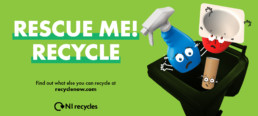
Recycle Week 2024 - Rescue me! Recycle
It's Recycle Week (14-20 October), and this year, we're celebrating and highlighting items that can be recycled.
Recycle Week is the UK's biggest celebration of recycling, and for Recycle Week 2024, Footprint is joining an urgent crusade to save five packaging items from being thrown away and to keep them out of the bin by living a circular life through recycling.
The latest research from Recycle Now shows that while we are a nation of recyclers - nine out of ten people regularly recycle - nearly eight out of ten of us (79%) put one or more items into the bin that can be recycled.
We are supporting the 'Rescue Me – Recycle' campaign to raise awareness about the five types of packaging that need recycling: aerosols, trigger spray bottles, plastic pots, perfume bottles, and toilet roll tubes.
Recycling is essential to reducing the environmental impact of our purchases. By keeping these materials in circulation, we can lower emissions. While most people recycle, we need to ensure that everyone recycles everything they can, including every aerosol, trigger spray bottle, plastic pot, perfume bottle, and toilet roll tube. Rescue, recycle!
To learn more about the recycling process, visit Recycle Now. To find out what can be recycled in your area, enter your postcode into the Recycling Locator for instant information on recycling anywhere in the UK.
If you're a business looking to make a meaningful impact, join us in our 'Rescue Me – Recycle' campaign! Together, we can turn waste into sustainable solutions for our planet. Your contributions matter whether you're a small startup or an established business. Feel free to reach out if you want to learn how your business can play a pivotal role in this initiative. Let's collaborate for a greener future, drop us a line clare@footprint-recycling.com.